Ready Mix Plant and Central Mix Plant Differ In
Nov 24, 2026
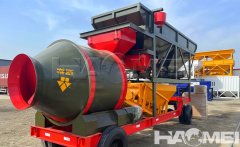
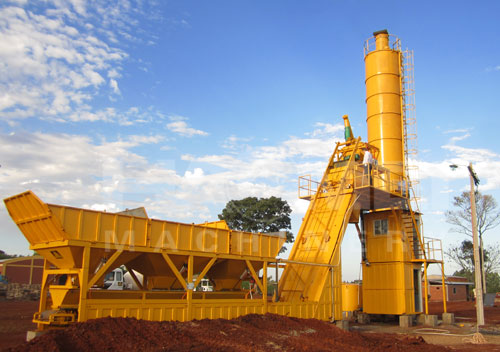
A "ready-mix concrete plant" (often referred to in the industry as a "dry-batch" or "transit-mix" plant) typically involves proportioning dry materials and loading them into a transit mixer truck, where water is added and the final mixing process takes place during transport. In contrast, a "central mixing plant" (or "wet-mix" plant) is equipped with a dedicated, high-intensity stationary mixer. All raw materials—including water and admixtures—are thoroughly blended at the plant site; the transit mixer truck serves only to transport the concrete at a low rotation speed to prevent segregation. The core differences lie in the location of the mixing process, the logic behind quality control and the equipment configuration.
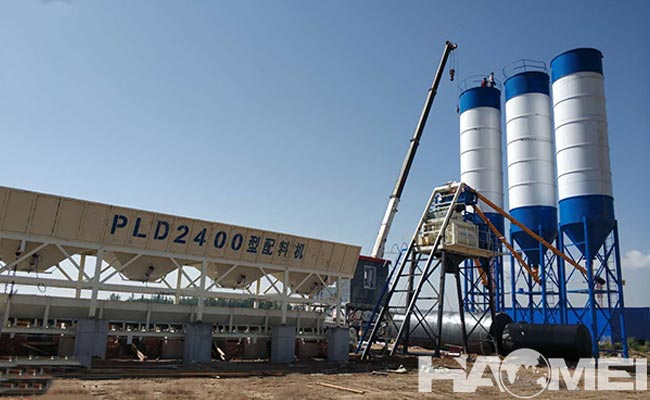
Regarding the production process, a ready-mix concrete plant handles the weighing and proportioning of aggregates and powders, discharging the dry mixture directly into a transit mixer truck, where water addition and mixing occur. This approach is well-suited for longer transport distances, as the timing of water addition can be adjusted based on the travel time, thereby reducing the risk of premature concrete setting. Standard models offer capacities ranging from 25 to 180 m³/h and feature a simplified structure that does not require a high-power stationary mixer. A
central mix concrete plant, however, utilizes a twin-shaft forced-action mixer for centralized blending. With a mixing cycle of approximately 30–45 seconds per batch, it ensures highly consistent output quality. It is capable of producing concrete with low slump or high-strength, specialized mix designs, making it ideal for precast components, large-scale road construction, and hydraulic engineering projects. Mainstream models typically offer capacities between 60 and 240 m³/h.
In terms of quality control, the mixing process in a central mix plant is enclosed and strictly controlled; mix proportions and mixing durations are locked into an industrial control system, resulting in minimal strength variation between batches. In contrast, the mixing quality in a ready-mix concrete plant can be influenced by the rotation speed of the transit mixer, road conditions, and the operator's technique, leading to a higher risk of slump inconsistency during long-distance transport. Field experience shows that for projects with stringent durability requirements—such as bridges or port facilities—most project owners prefer the central mixing approach.
There are also significant differences in terms of investment and operational/maintenance costs. For the same nominal production capacity, a central mixing plant entails a 20%–35% higher initial capital cost; furthermore, its primary components—such as mixer liners and mixing arms—are subject to high wear, necessitating a greater volume of maintenance. In contrast, a standard
ready-mix concrete plant features a simpler configuration and lower costs for civil infrastructure and spare parts inventory, making it well-suited for commercial concrete enterprises that operate multiple sites or serve various projects simultaneously.
The two types are suited to different operational scenarios. Ready-mix concrete plants are geared toward the commercial market, serving multiple scattered construction sites with flexible transport radii. Central mixing plants are typically deployed for large-scale, fixed-location projects or precast manufacturing facilities, where the priority is consistent, high-quality output. In some instances, mobile central mixing modules are utilized, allowing for rapid disassembly and relocation upon project completion.
When selecting concrete mixing equipment, it is essential to consider factors such as transport duration, technical specifications for the concrete, project duration, and budget. Haomei Machinery offers equipment configuration, site layout planning, and technical support for both types of concrete mixing plants, providing tailored solutions to match the specific operational requirements of each client.



 (Chat Online)


